 Red Hat Summit
Ce contenu n'est pas disponible dans la langue sélectionnée.
11.8. Hot Rod C# Client
The Hot Rod C# client allows .NET runtime applications to connect and interact with Red Hat JBoss Data Grid servers. This client is aware of the cluster topology and hashing scheme, and can access an entry on the server in a single hop similar to the Hot Rod Java and Hot Rod C++ clients.
The Hot Rod C# client is compatible with 64-bit operating systems on which the .NET Framework is supported by Microsoft. The .NET Framework 4.5 is a prerequisite along with the supported operating systems to use the Hot Rod C# client.
11.8.1. Hot Rod C# Client Download and Installation
Copier lienLien copié sur presse-papiers!
The Hot Rod C# client is included in a .msi file
jboss-datagrid-<version>-hotrod-dotnet-client.msi packed for download with Red Hat JBoss Data Grid . To install the Hot Rod C# client, execute the following instructions.
Procedure 11.2. Installing the Hot Rod C# Client
- As an administrator, navigate to the location where the Hot Rod C# .msi file is downloaded. Run the .msi file to launch the windows installer and then click .
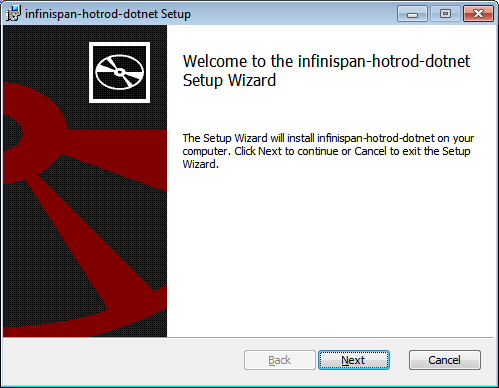
Figure 11.1. Hot Rod C# Client Setup Welcome
- Review the end-user license agreement. Select the I accept the terms in the License Agreement check box and then click .
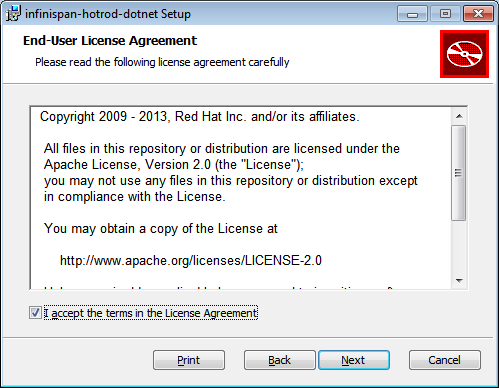
Figure 11.2. Hot Rod C# Client End-User License Agreement
- To change the default directory, click or click to install in the default directory.
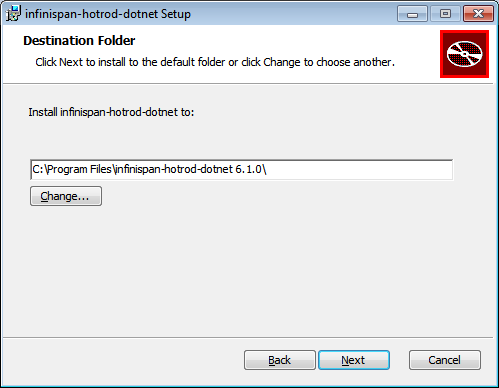
Figure 11.3. Hot Rod C# Client Destination Folder
- Click to complete the Hot Rod C# client installation.
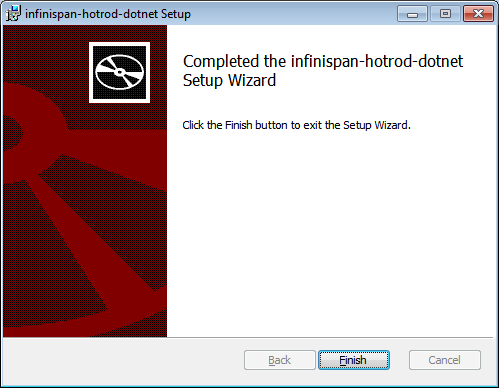
Figure 11.4. Hot Rod C# Client Setup Completion
11.8.2. Hot Rod C# Client Configuration
Copier lienLien copié sur presse-papiers!
The Hot Rod C# client is configured programmatically using the ConfigurationBuilder. Configure the host and the port to which the client should connect.
Sample C# file configuration
The following example shows how to use the ConfigurationBuilder to configure a RemoteCacheManager.
Example 11.9. C# configuration
using System;
using System.Collections.Generic;
using System.Linq;
using System.Text;
using System.Threading.Tasks;
using Infinispan.HotRod;
using Infinispan.HotRod.Config;
namespace simpleapp
{
    class Program
    {
        static void Main(string[] args)
        {
            ConfigurationBuilder builder = new ConfigurationBuilder();
            builder.AddServer()
                .Host(args.Length > 1 ? args[0] : "127.0.0.1")
                .Port(args.Length > 2 ? int.Parse(args[1]) : 11222);
            Configuration config = builder.Build();
            RemoteCacheManager cacheManager = new RemoteCacheManager(config);
            [...]
        }
    }
}11.8.3. Hot Rod C# Client API
Copier lienLien copié sur presse-papiers!
The
RemoteCacheManager is a starting point to obtain a reference to a RemoteCache.
The following example shows retrieval of a default cache from the server and a few basic operations.
Example 11.10.
using System;
using System.Collections.Generic;
using System.Linq;
using System.Text;
using System.Threading.Tasks;
using Infinispan.HotRod;
using Infinispan.HotRod.Config;
namespace simpleapp
{
    class Program
    {
        static void Main(string[] args)
        {
            ConfigurationBuilder builder = new ConfigurationBuilder();
            builder.AddServer()
                .Host(args.Length > 1 ? args[0] : "127.0.0.1")
                .Port(args.Length > 2 ? int.Parse(args[1]) : 11222);
            Configuration config = builder.Build();
            RemoteCacheManager cacheManager = new RemoteCacheManager(config);
            cacheManager.Start();
            // Retrieve a reference to the default cache.
            IRemoteCache<String, String> cache = cacheManager.GetCache<String, String>();
            // Add entries.
            cache.Put("key1", "value1");
            cache.PutIfAbsent("key1", "anotherValue1");
            cache.PutIfAbsent("key2", "value2");
            cache.PutIfAbsent("key3", "value3");
            // Retrive entries.
            Console.WriteLine("key1 -> " + cache.Get("key1"));
            // Bulk retrieve key/value pairs.
            int limit = 10;
            IDictionary<String, String> result = cache.GetBulk(limit);
            foreach (KeyValuePair<String, String> kv in result)
            {
                Console.WriteLine(kv.Key + " -> " + kv.Value);
            }
            // Remove entries.
            cache.Remove("key2");
            Console.WriteLine("key2 -> " + cache.Get("key2"));
            cacheManager.Stop();
        }
    }
}11.8.4. String Marshaller for Interoperability
Copier lienLien copié sur presse-papiers!
To use the string compatibility marshaller, pass an instance of
CompatibilityMarshaller to the Marshaller() method of the ConfigurationBuilder object similar to this:
ConfigurationBuilder builder = new ConfigurationBuilder();
builder.Marshaller(new CompatibilityMarshaller());
RemoteCacheManager cacheManager = new RemoteCacheManager(builder.build(), true);
IRemoteCache<String, String> cache = cacheManager.GetCache<String, String>();
[....]
cache.Put("key", "value");
[...]
cache.Get("key");
[...]
Note
Attempts to store or retrieve non-string key/values will result in a
HotRodClientException being thrown.

'%20d='M201.5%20305.5c-13.8%200-24.9-11.1-24.9-24.6%200-13.8%2011.1-24.9%2024.9-24.9%2013.6%200%2024.6%2011.1%2024.6%2024.9%200%2013.6-11.1%2024.6-24.6%2024.6zM504%20256c0%20137-111%20248-248%20248S8%20393%208%20256%20119%208%20256%208s248%20111%20248%20248zm-132.3-41.2c-9.4%200-17.7%203.9-23.8%2010-22.4-15.5-52.6-25.5-86.1-26.6l17.4-78.3%2055.4%2012.5c0%2013.6%2011.1%2024.6%2024.6%2024.6%2013.8%200%2024.9-11.3%2024.9-24.9s-11.1-24.9-24.9-24.9c-9.7%200-18%205.8-22.1%2013.8l-61.2-13.6c-3-.8-6.1%201.4-6.9%204.4l-19.1%2086.4c-33.2%201.4-63.1%2011.3-85.5%2026.8-6.1-6.4-14.7-10.2-24.1-10.2-34.9%200-46.3%2046.9-14.4%2062.8-1.1%205-1.7%2010.2-1.7%2015.5%200%2052.6%2059.2%2095.2%20132%2095.2%2073.1%200%20132.3-42.6%20132.3-95.2%200-5.3-.6-10.8-1.9-15.8%2031.3-16%2019.8-62.5-14.9-62.5zM302.8%20331c-18.2%2018.2-76.1%2017.9-93.6%200-2.2-2.2-6.1-2.2-8.3%200-2.5%202.5-2.5%206.4%200%208.6%2022.8%2022.8%2087.3%2022.8%20110.2%200%202.5-2.2%202.5-6.1%200-8.6-2.2-2.2-6.1-2.2-8.3%200zm7.7-75c-13.6%200-24.6%2011.1-24.6%2024.9%200%2013.6%2011.1%2024.6%2024.6%2024.6%2013.8%200%2024.9-11.1%2024.9-24.6%200-13.8-11-24.9-24.9-24.9z'/%3e%3c/svg%3e)