 Red Hat Summit
이 콘텐츠는 선택한 언어로 제공되지 않습니다.
1.2. Security Identity
An Enterprise Java Bean (EJB) can specify the identity another EJB must use when it invokes methods on components using the <security-identity> element. Figure 1.2, “The security-identity element” describes the <security-identity> element, its child elements, and attributes.
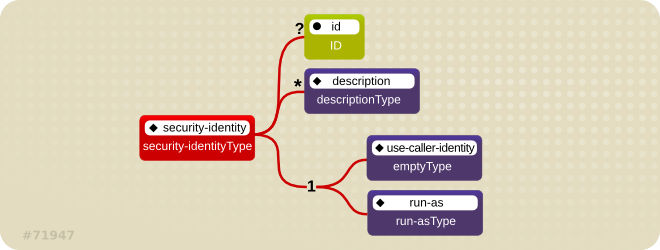
Figure 1.2. The security-identity element
The invocation identity can be that of the current caller, or it can be a specific role. The application assembler uses the <security-identity> element with a <use-caller-identity> child element. This indicate that the current caller's identity should be propagated as the security identity for method invocations made by the EJB. Propagation of the caller's identity is the default used in the absence of an explicit <security-identity> element declaration.
Alternatively, the application assembler can use the <run-as> or <role-name> child element to specify that a specific security role supplied by the <role-name> element value must be used as the security identity for method invocations made by the EJB.
Note that this does not change the caller's identity as seen by the
EJBContext.getCallerPrincipal() method. Rather, the caller's security roles are set to the single role specified by the <run-as> or <role-name> element value.
One use case for the <run-as> element is to prevent external clients from accessing internal EJBs. You configure this behavior by assigning the internal EJB <method-permission> elements, which restrict access to a role never assigned to an external client. EJBs that must in turn use internal EJBs are then configured with a <run-as> or <role-name> equal to the restricted role. The following descriptor fragment describes an example<security-identity> element usage.
<!-- A sample ejb-jar.xml fragment -->
<ejb-jar>
    <enterprise-beans>
        <session>
            <ejb-name>ASessionBean</ejb-name>
            <!-- ... -->
            <security-identity>
                <use-caller-identity/>
            </security-identity>
        </session>
        <session>
            <ejb-name>RunAsBean</ejb-name>
            <!-- ... -->
            <security-identity>
                <run-as>
                    <description>A private internal role</description>
                    <role-name>InternalRole</role-name>
                </run-as>
            </security-identity>
        </session>
    </enterprise-beans>
    <!-- ... -->
</ejb-jar>
When you use <run-as> to assign a specific role to outgoing calls, a principal named
anonymous is assigned to all outgoing calls. If you want another principal to be associated with the call, you must associate a <run-as-principal> with the bean in the jboss.xml file. The following fragment associates a principal named internal with RunAsBean from the prior example.
<session>
    <ejb-name>RunAsBean</ejb-name>
    <security-identity>
        <run-as-principal>internal</run-as-principal>
    </security-identity>
</session>
The <run-as> element is also available in servlet definitions in a
web.xml file. The following example shows how to assign the role InternalRole to a servlet:
<servlet>
    <servlet-name>AServlet</servlet-name>
    <!-- ... -->
    <run-as>
        <role-name>InternalRole</role-name>
    </run-as>
</servlet>
Calls from this servlet are associated with the anonymous
principal. The <run-as-principal> element is available in the jboss-web.xml file to assign a specific principal to go along with the run-as role. The following fragment shows how to associate a principal named internal to the servlet above.
<servlet>
    <servlet-name>AServlet</servlet-name>
    <run-as-principal>internal</run-as-principal>
</servlet>

'%20d='M201.5%20305.5c-13.8%200-24.9-11.1-24.9-24.6%200-13.8%2011.1-24.9%2024.9-24.9%2013.6%200%2024.6%2011.1%2024.6%2024.9%200%2013.6-11.1%2024.6-24.6%2024.6zM504%20256c0%20137-111%20248-248%20248S8%20393%208%20256%20119%208%20256%208s248%20111%20248%20248zm-132.3-41.2c-9.4%200-17.7%203.9-23.8%2010-22.4-15.5-52.6-25.5-86.1-26.6l17.4-78.3%2055.4%2012.5c0%2013.6%2011.1%2024.6%2024.6%2024.6%2013.8%200%2024.9-11.3%2024.9-24.9s-11.1-24.9-24.9-24.9c-9.7%200-18%205.8-22.1%2013.8l-61.2-13.6c-3-.8-6.1%201.4-6.9%204.4l-19.1%2086.4c-33.2%201.4-63.1%2011.3-85.5%2026.8-6.1-6.4-14.7-10.2-24.1-10.2-34.9%200-46.3%2046.9-14.4%2062.8-1.1%205-1.7%2010.2-1.7%2015.5%200%2052.6%2059.2%2095.2%20132%2095.2%2073.1%200%20132.3-42.6%20132.3-95.2%200-5.3-.6-10.8-1.9-15.8%2031.3-16%2019.8-62.5-14.9-62.5zM302.8%20331c-18.2%2018.2-76.1%2017.9-93.6%200-2.2-2.2-6.1-2.2-8.3%200-2.5%202.5-2.5%206.4%200%208.6%2022.8%2022.8%2087.3%2022.8%20110.2%200%202.5-2.2%202.5-6.1%200-8.6-2.2-2.2-6.1-2.2-8.3%200zm7.7-75c-13.6%200-24.6%2011.1-24.6%2024.9%200%2013.6%2011.1%2024.6%2024.6%2024.6%2013.8%200%2024.9-11.1%2024.9-24.6%200-13.8-11-24.9-24.9-24.9z'/%3e%3c/svg%3e)