 红帽全球峰会
第 2 章 了解 Operator
2.1. 什么是 Operator?
从概念上讲,Operator 会收集人类操作知识,并将其编码成更容易分享给消费者的软件。
Operator 是一组软件,可用于降低运行其他软件的操作复杂程度。它可以被看作是软件厂商的工程团队的扩展,可以在 Kubernetes 环境中(如 OpenShift Container Platform)监控软件的运行情况,并根据软件的当前状态实时做出决策。Advanced Operator 被设计为用来无缝地处理升级过程,并对出现的错误自动进行响应,而且不会采取“捷径”(如跳过软件备份过程来节省时间)。
从技术上讲,Operator 是一种打包、部署和管理 Kubernetes 应用程序的方法。
Kubernetes 应用程序是一款 app,可在 Kubernetes 上部署,也可使用 Kubernetes API 和 kubectl 或 oc 工具进行管理。要想充分利用 Kubernetes,您需要一组统一的 API 进行扩展,以便服务和管理 Kubernetes 上运行的应用程序。可将 Operator 看成管理 Kubernetes 中这类应用程序的运行时。
2.1.1. 为什么要使用 Operator?
Operator 可以:
- 重复安装和升级。
- 持续对每个系统组件执行运行状况检查。
- 无线 (OTA) 更新 OpenShift 组件和 ISV 内容。
- 汇总现场工程师了解的情况并将其传输给所有用户,而非一两个用户。
- 为什么在 Kubernetes 上部署?
- Kubernetes(扩展至 OpenShift Container Platform)包含构建复杂分布式系统(可在本地和云提供商之间工作)需要的所有原语,包括 secret 处理、负载均衡、服务发现、自动扩展。
- 为什么使用 Kubernetes API 和
kubectl工具来管理您的应用程序? -
这些 API 功能丰富,所有平台均有对应的客户端,并可插入到集群的访问控制/审核中。Operator 会使用 Kubernetes 的扩展机制“自定义资源定义 (CRD)”支持您的自定义对象,如
MongoDB,它类似于内置的原生 Kubernetes 对象。 - Operator 与 Service Broker 的比较?
- 服务代理(service broker)是实现应用程序的编程发现和部署的一个步骤。但它并非一个长时间运行的进程,所以无法执行第 2 天操作,如升级、故障转移或扩展。它在安装时提供对可调参数的自定义和参数化,而 Operator 则可持续监控集群的当前状态。非集群服务仍非常适合于 Service Broker,但也存在合适于这些服务的 Operator。
2.1.2. Operator Framework
Operator Framework 是基于上述客户体验提供的一系列工具和功能。不仅仅是编写代码;测试、交付和更新 Operator 也同样重要。Operator Framework 组件包含用于解决这些问题的开源工具:
- Operator SDK
- Operator SDK 辅助 Operator 作者根据自身专业知识,引导、构建、测试和包装其 Operator,而无需了解 Kubernetes API 的复杂性。
- Operator Lifecycle Manager
- Operator Lifecycle Manager (OLM) 能够控制集群中 Operator 的安装、升级和基于角色的访问控制 (RBAC)。在 OpenShift Container Platform 4.12 中默认部署。
- Operator Registry
- Operator Registry 存储 ClusterServiceVersions (CSV) 和自定义资源定义 (CRD) 以便在集群中创建,并存储有关软件包和频道的 Operator 元数据。它运行在 Kubernetes 或 OpenShift 集群中,向 OLM 提供这些 Operator 目录数据。
- OperatorHub
- OperatorHub 是一个 web 控制台,供集群管理员用来发现并选择要在其集群上安装的 Operator。它在 OpenShift Container Platform 中默认部署。
这些工具可组合使用,因此您可自由选择对您有用的工具。
2.1.3. Operator 成熟度模型
Operator 内部封装的管理逻辑的复杂程度各有不同。该逻辑通常还高度依赖于 Operator 所代表的服务类型。
对于大部分 Operator 可能包含的特定功能集来说,可以大致推断出 Operator 封装操作的成熟度等级。就此而言,以下 Operator 成熟度模型针对 Operator 的第二天通用操作定义了五个成熟度阶段:
图 2.1. Operator 成熟度模型
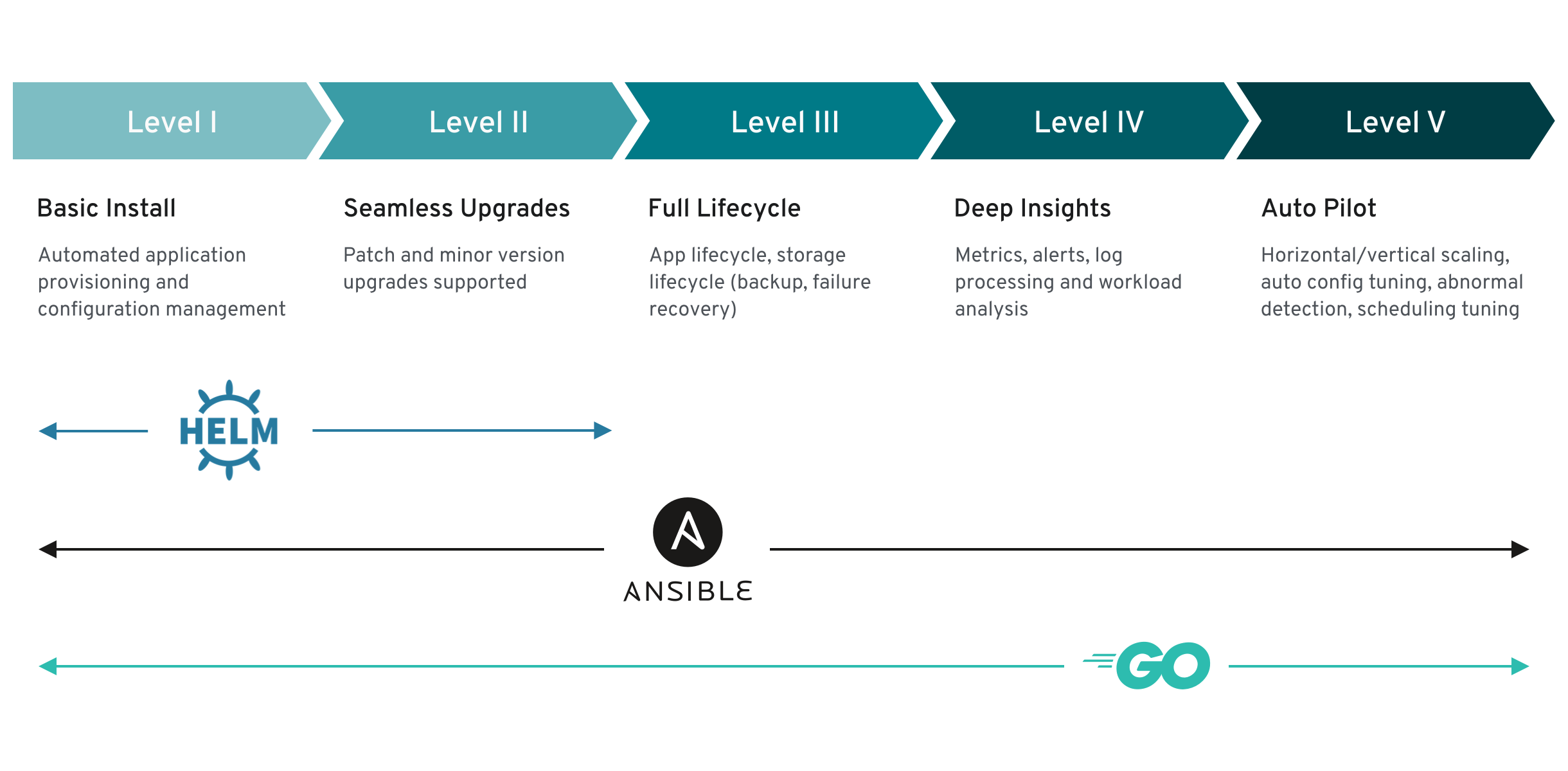
以上模型还显示了如何通过 Operator SDK 的 Helm、Go 和 Ansible 功能更好地开发这些功能。

'%20d='M201.5%20305.5c-13.8%200-24.9-11.1-24.9-24.6%200-13.8%2011.1-24.9%2024.9-24.9%2013.6%200%2024.6%2011.1%2024.6%2024.9%200%2013.6-11.1%2024.6-24.6%2024.6zM504%20256c0%20137-111%20248-248%20248S8%20393%208%20256%20119%208%20256%208s248%20111%20248%20248zm-132.3-41.2c-9.4%200-17.7%203.9-23.8%2010-22.4-15.5-52.6-25.5-86.1-26.6l17.4-78.3%2055.4%2012.5c0%2013.6%2011.1%2024.6%2024.6%2024.6%2013.8%200%2024.9-11.3%2024.9-24.9s-11.1-24.9-24.9-24.9c-9.7%200-18%205.8-22.1%2013.8l-61.2-13.6c-3-.8-6.1%201.4-6.9%204.4l-19.1%2086.4c-33.2%201.4-63.1%2011.3-85.5%2026.8-6.1-6.4-14.7-10.2-24.1-10.2-34.9%200-46.3%2046.9-14.4%2062.8-1.1%205-1.7%2010.2-1.7%2015.5%200%2052.6%2059.2%2095.2%20132%2095.2%2073.1%200%20132.3-42.6%20132.3-95.2%200-5.3-.6-10.8-1.9-15.8%2031.3-16%2019.8-62.5-14.9-62.5zM302.8%20331c-18.2%2018.2-76.1%2017.9-93.6%200-2.2-2.2-6.1-2.2-8.3%200-2.5%202.5-2.5%206.4%200%208.6%2022.8%2022.8%2087.3%2022.8%20110.2%200%202.5-2.2%202.5-6.1%200-8.6-2.2-2.2-6.1-2.2-8.3%200zm7.7-75c-13.6%200-24.6%2011.1-24.6%2024.9%200%2013.6%2011.1%2024.6%2024.6%2024.6%2013.8%200%2024.9-11.1%2024.9-24.6%200-13.8-11-24.9-24.9-24.9z'/%3e%3c/svg%3e)